
Testimonials
The stories behind the artwork are just as meaningful as the artwork itself.
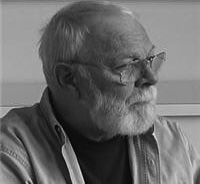
Robert Singleton On the Drawings of Ralph Cale...
Some artists shout and some whisper. Ralph Cale, rightly called “Appalachia’s Pencil Artist,” whispers, and that is why we lean in to listen. His drawings are mostly quiet, but they carry a great deal of meaning. Each one feels like a moment caught in time, from a time most of us have long forgotten or never knew. Yet we recognize it at once, the way we recognize a smell from childhood before we can name it. He has said that “worn, weathered, forgotten or overlooked things” are what inspire his work, and I think that tells us a great deal about him. Most of us pass these things every day without seeing them: a split board, a rusted nail, a window clouded by years of weather. Ralph stops for them. He gives them the patient attention we usually save for faces and flowers, and in doing so he shows us that the overlooked has dignity and the humble has beauty.
A Master of Subtleties
The pencil is the most modest of tools. It has no color and no brilliance, and it cannot hide anything. Every mark shows. In the wrong hands it gives you only an outline. In Ralph Cale’s hands it becomes a whole world of grays, from the faintest silver to a velvety near-black, and in those many shades he finds texture, temperature, age and feeling. Look at the grain of his wood. Each board has its own history. You can follow the long lines of growth, the knots where branches once were, and the soft rounding at the edges where wind and rain have worn it down. The nails sit in their holes with the slight tilt and crust of iron that has been out in the weather for decades. One nail, bent and half pulled out of the sill, casts its
own small shadow. This is not just accuracy. It is love expressed through looking. His real mastery, though, lies in what he leaves unsaid. He knows when to sharpen a detail and when to let it fade, when to hold a line hard and when to let it dissolve into atmosphere. These transitions are where the mood lives, and they are very hard to achieve. They take years of discipline and a temperament willing to slow down.
The Mystery of a Mood
In the drawing before me, an old face looks out through the pane of a weathered window. The wood around it is rendered with almost tactile clarity: the planks, the sill, the nail heads. But the face is seen through dusty, clouded glass. It is soft and half emerging from shadow, as if it belongs partly to the present and partly to memory. The eyes meet ours directly. They are wary and searching, maybe lonely, maybe just curious about who has come up the path. We do not know who this person is, and Ralph does not tell us. That is the mystery he captures so well. Is this someone waiting for a visitor who will never come? Is it a ghost of the old homeplace, or simply a neighbor glancing out on an ordinary afternoon? The drawing leaves the question open, and in that openness we bring our own grandparents, our own abandoned farmhouses, our own departed. The contrast between the sharp, solid wood and the dim, uncertain face is the heart of the image. The world of things endures. The human presence behind the glass is fleeting.
A Sense of Nostalgia, Without Sentimentality
Nostalgia is easy to cheapen. Too much sweetness and it becomes a greeting card. Ralph Cale avoids this because he is honest. The boards are cracked. The paint is long gone. The nails are rusting. He does not prettify the past. He shows us its wear and lets us feel both the tenderness and the loss. What we feel is not mere longing for “the good old days” but a deeper recognition that time moves through everything, and that what is worn has also been lived. This is Appalachian truth. The mountains have long been a place of hard work, endurance, and quiet pride. Their barns, cabins, porches, and the faces of their people carry a history that is rarely recorded and easily lost. Ralph Cale has made himself a keeper of that history. His drawings are a kind of preservation, not in the manner of a photograph that simply records, but in the manner of an artist who understands what a thing means and draws that meaning out.
Patience as a Form of Devotion
Anyone who has drawn seriously knows what a work like this costs. Thousands of strokes built up layer upon layer. Hours spent on a single board. The constant restraint of not overworking, not rushing, not reaching for an effect the drawing has not yet earned. In an age that rewards speed and spectacle, such patience is almost a moral stance. It says that slowness matters, that looking matters, that the smallest corner of the world deserves our full attention. That his work hangs in fine shops and galleries throughout the region, and that his prints and originals are now in collections across the country, tells me that many people have felt what I feel when I stand before his drawings: a stillness, a recognition, a pull toward something we nearly forgot.
A Young Artist of Promise
What moves me most is that Ralph Cale is still young. Many artists take a lifetime to arrive at the restraint and depth he already shows. He has found his subject, his medium, and his voice, and they belong together. I look forward to watching his work deepen over the coming decades, as l am sure it will. Ralph Cale reminds us that the past is not entirely gone. It lingers in the grain of old wood, in the dust on a windowpane, and in the eyes of a face we almost recognize. With nothing more than a pencil and a great deal of heart, he brings it back to us, quietly and truthfully. That is no small gift.
– R. Singleton
What Collectors Are Saying
“I recently had the privilege of purchasing one of Ralph’s magnificent pencil drawings featuring an old International truck like the one my grandfather once drove. To some, it may be a drawing of an old truck, but to me, it is so much more. It is a connection to my grandfather, my family’s history, and the Appalachian roots that will always be a part of who I am. Ralph has a remarkable gift for capturing the soul of Appalachia through his pencil artwork. His attention to detail and ability to bring the past to life are extraordinary. His work evokes memories, tells stories, and preserves a way of life that means so much to those of us who call West Virginia home. Every time I look at my piece, I feel a sense of peace and comfort. It takes me back to where I came from and reminds me of the people, places, and memories that helped shape my life. That is the beauty of Ralph’s art — it doesn’t just capture an image; it captures a feeling, a history, and a piece of your heart”
~ Kathy Montroso Harrison
“Ralph Cale is a true and genuine pencil artist of West Virginia’s past coal mining and Appalachian history. His wonderful pencil artwork reminds me of how my family grew up on the farm and the coal mines of West Virginia. When I first saw his artwork, I was so shocked and overwhelmed by how similar the artwork looked to the farm where I grew up and the coal mine artwork and buildings depicted from years past. He truly represents the artisans of West Virginia”
~ Regina Kalisz
“Ralph does with a pencil what cameras do with black and white photography. However, a camera shows you exactly what it sees. Ralph shows you what he sees with his passion”
~ Art Divilbliss
“ Ralph’s artwork is a West Virginia treasure”
~ Susan Costilo Harman
“I absolutely love your work. It is truly amazing”
~ Lacy Wagner
“Bringing back the yesteryear, history, and the roots of West Virginia. Outstanding talent”
~ Barbara Lavonne Courtney